Nuestras oficinas permanecerán cerradas por la temporada festiva del 25 de diciembre de 2025 al 11 de enero de 2026. Para asuntos urgentes, por favor contacte a support@pecb.com.

Nuestras oficinas permanecerán cerradas por la temporada festiva del 25 de diciembre de 2025 al 11 de enero de 2026. Para asuntos urgentes, por favor contacte a support@pecb.com.

Nuestras oficinas permanecerán cerradas por la temporada festiva del 25 de diciembre de 2025 al 11 de enero de 2026. Para asuntos urgentes, por favor contacte a support@pecb.com.

PECB Chief Information Security Officer (CISO) – Training Courses

¿Qué es la seguridad de la información?

La seguridad de la información se refiere a los procesos y controles destinados a proteger la información, ya sea electrónica o física. Determina qué información necesita estar protegida, la razón por la cual debería estar protegida, cómo protegerla y de qué protegerla. La seguridad de la información cubre muchas áreas, incluida la seguridad de la red, la seguridad de las aplicaciones, la seguridad física, la respuesta a incidentes, y la seguridad de la cadena de suministro. Las organizaciones establecen e implementan políticas, marcos, procesos y controles para asegurar la información y apoyar los objetivos de negocio.

La seguridad de la información se basa en tres principios fundamentales: Confidencialidad, integridad y disponibilidad. Una estrategia integral de seguridad de la información que incorpora estos tres principios posibilita la seguridad y privacidad de la información, el control de acceso, la gestión de riesgos y la respuesta a incidentes, entre otros. No solo mitiga los riesgos, sino que también genera confianza entre las partes interesadas, fomentando una base sólida para una gestión eficaz de las operaciones y el crecimiento.

¿Por qué es importante la seguridad de la información para usted?

La información puede ser comunicada, almacenada, refinada y utilizada para controlar procesos. Es uno de los activos más valiosos y significativos de una organización. Para garantizar su correcta gestión y protección, la información debe rastrearse a lo largo de su ciclo de vida, desde su creación hasta su eliminación. El rastreo de la información puede ayudar a identificar posibles amenazas de seguridad, rastrear el acceso y el uso, y proporcionar responsabilidad por violaciones de datos u otros incidentes. Además, la información debería actualizarse cuando sea necesario, de conformidad con los procedimientos y políticas establecidos.

Numerosas personas y organizaciones se ven afectadas por violaciones de datos y expuestas a diferentes tipos de actividades perjudiciales. La falta de controles de seguridad adecuados puede convertir una pequeña vulnerabilidad en una enorme fuga de datos, lo que llevaría a consecuencias importantes dentro de una organización, como la pérdida de ingresos, la reputación dañada o la pérdida de propiedad intelectual.

Al tomar los cursos de capacitación de PECB Chief Information Security Officer, usted desarrollará los conocimientos profesionales para planificar y supervisar la implementación de un programa de seguridad de la información y, a su vez, asegurarse de que la información confidencial de una organización esté protegida contra la divulgación.

Beneficios de la certificación de Chief Information Security Officer

Un certificado de PECB Chief Information Security Officer demuestra que usted es capaz de:

  • Apoyar a una organización en el desarrollo e implementación de una estrategia de seguridad de la información
  • Identificar, analizar y mitigar los problemas relacionados con la seguridad de la información
  • Establecer, mantener y mejorar políticas, procesos y controles de seguridad de la información
  • Utilizar las mejores prácticas y técnicas para mejorar las arquitecturas de seguridad y los diseños y controles de gestión
  • Supervisar y mejorar eficazmente las capacidades de respuesta a incidentes
  • Asegurar el cumplimiento de normas y regulaciones específicas relacionadas con la seguridad de la información
  • Gestionar eficazmente proyectos complejos y mostrar fuertes habilidades de liderazgo

¿Cómo puedo iniciar con la capacitación de Chief Information Security Officer?

¿Cómo puedo iniciar con la capacitación de Chief Information Security Officer?

Con nuestros cursos de capacitación para PECB Chief Information Security Officer, podrá mejorar y validar su comprensión de las complejidades técnicas y de seguridad al establecer y gestionar un programa de seguridad de la información.

Los expertos de PECB están aquí para guiarlo y apoyarlo durante todo el proceso de certificación con el fin de ofrecerle una experiencia ventajosa para tener éxito en el más alto nivel de su carrera de seguridad de la información.

No dude en contactarnos para iniciar con la primera etapa

Need support for your career development?

Download and personalize our request letter to ask your employer for funding.
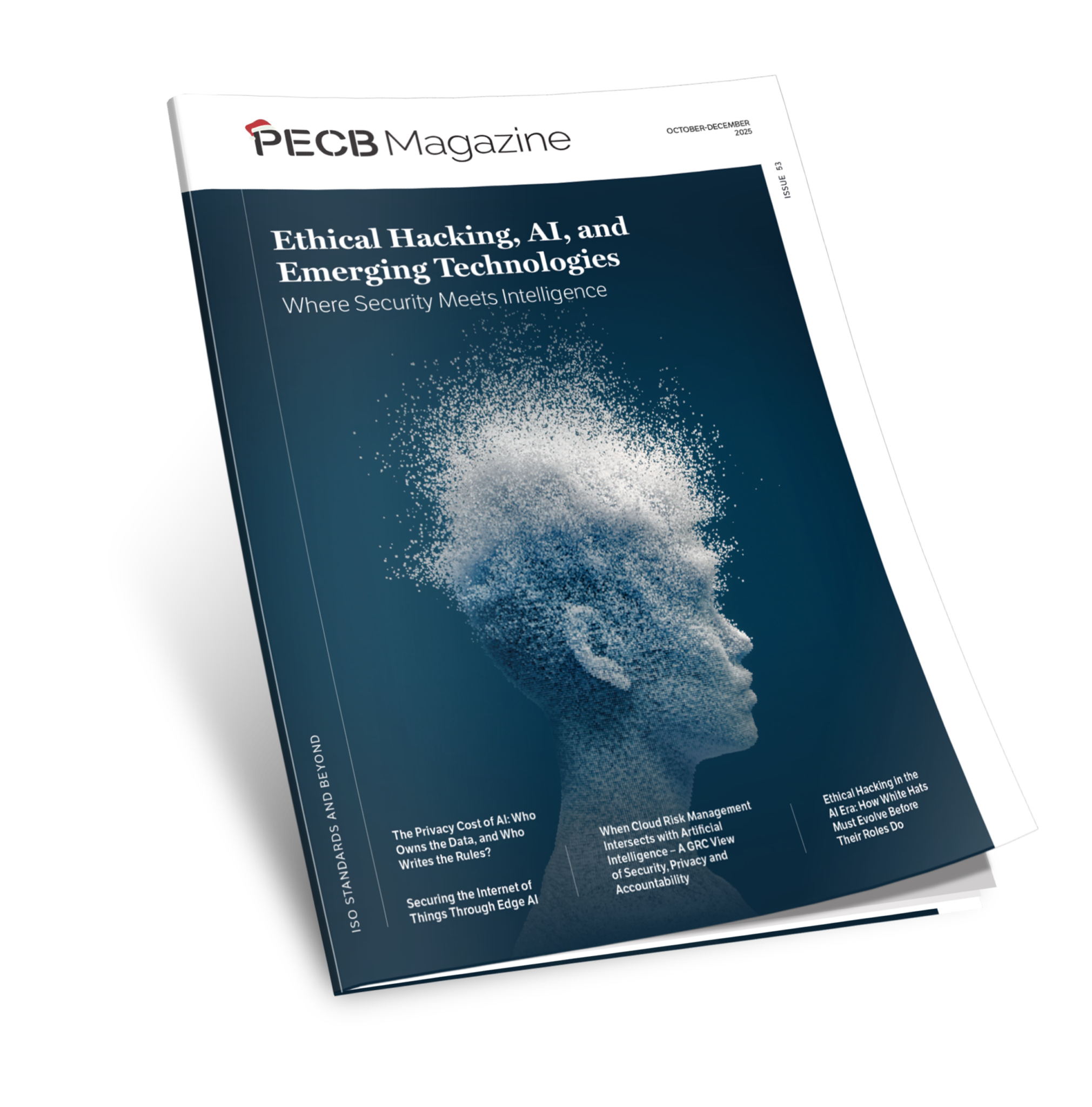
Explore Issue

Related Course

ISO/IEC 27001 Information Security Management System – Training Courses


Learn how to build your expertise in ISO/IEC 27001, the international standard for Information Security Management Systems (ISMS). Whether you’re starting your journey or advancing your career, our ISO/IEC 27001 training courses and certifications equip you with practical, in-demand skills to protect data, manage information risks, and enhance digital trust.

What is ISO/IEC 27001?

ISO/IEC 27001 provides requirements for organizations seeking to establish, implement, maintain and continually improve an information security management system. This framework serves as a guideline towards continually reviewing the safety of your information, which will exemplify reliability and add value to services of your organization.

Why is ISO/IEC 27001 important?

ISO/IEC 27001 assists you to understand the practical approaches that are involved in the implementation of an Information Security Management System that preserves the confidentiality, integrity, and availability of information by applying a risk management process. Therefore, implementation of an information security management system that complies with all requirements of ISO/IEC 27001 enables your organizations to assess and treat information security risks that they face.

Certified ISO/IEC 27001 individuals will prove that they possess the necessary expertise to support organizations implement information security policies and procedures tailored to the organization’s needs and promote continual improvement of the management system and organizations operations.

Moreover, you will be able to demonstrate that you have the necessary skills to support the process of integrating the information security management system into the organization’s processes and ensure that the intended outcomes are achieved.


ISO/IEC 27001 Requirements and Controls?

Key Requirements of ISO/IEC 27001

ISO/IEC 27001 outlines several mandatory requirements that ensure a systematic approach to managing sensistive information. The most important rrequirements include:

  1. Context of the Organization
    • Identify internal and external issues affecting information security.
    • Determine the needs and expectations of stakeholders.
  2. Leadership and Commitment
    • Top management must demonstrate active involvement in ISMS implementation.
    • Establish clear roles, responsibilities, and policies.
  3. Risk Assessment and Risk Treatment
    • Identify, analyze, and evaluate risks to information security.
    • Implement appropriate risk treatments to mitigate identified risks.
  4. Support
    • Provide adequate resources, training, and communication to ensure ISMS effectiveness.
  5. Operation
    • Plan, implement, and control ISMS processes.
    • Manage risks and security incidents effectively.
  6. Performance Evaluation
    • Conduct internal audits and management reviews to evaluate ISMS performance.
  7. Continual Improvement

ISO/IEC 27001 Annex A Controls

ISO/IEC 27001 was updated in 2022 to ensure that information security management systems based on it effectively address the ever-evolving security challenges. The revision mainly focused on Annex A, where its controls were restructured into four themes, and the number was reduced from 114 to 93 controls.

The four themes of the security controls of ISO/IEC 27001:2022 are:

  1. Organizational Controls
    • Information Security Policies: Develop and implement comprehensive security policies.
    • Incident Management: Have processes in place for reporting and responding to security incidents.
  2. People Controls
    • Awareness and Training: Ensure employees understand security risks and practices
    • Screening: Conduct background checks during recruitment.
  3. Physical Controls
    • Secure Areas: Protect physical access to information processing facilities.
    • Equipment Security: Prevent loss or damage to assets.
  4. Technological Controls
    • Access Control: Restrict system access based on roles and responsibilities.
    • Cryptography: Use encryption to protect sensitive data.

27001 controls

The main changes between ISO/IEC 27001:2013 and ISO/IEC 27001:2022

The transition from ISO/IEC 27001:2013 to ISO/IEC 27001:2022 introduces significant updates to align with evolving cybersecurity and privacy needs. The standard title has expanded from focusing solely on «information security management systems» to incorporating «information security, cybersecurity, and privacy protection» in the 2022 version. Technical revisions include replacing terms such as «international standard» with «document» and «may» with «can,» reflecting a more flexible and modern approach. 

Additionally, Annex A has been streamlined, reducing the controls from 114 across 14 categories in the 2013 version to 93 controls organized into four key themes: organizational, people, physical, and technological. These changes make the 2022 standard more concise and practical for today’s information security challenges.
 

iso 27001:2013 vs 27001:2022

Understanding ISO/IEC 27001:2022 Annex A Controls

Key steps in ISO 27001 certification process

Explore the ISO/IEC 27001:2022 Annex A controls and how to implement them, to strengthen your ISMS and safeguard against cyber threats.

Benefits of ISO/IEC 27001 Certification

Obtaining the PECB ISO/IEC 27001 Certificate will prove that you have:

  • Obtained the necessary expertise to support an organization to implement an Information Security Management System that complies with ISO/IEC 27001
  • Understood the Information Security Management System implementation process
  • Provide continual prevention and assessments of threats within your organization
  • Higher chances of being distinguished or hired in an Information Security career
  • Understood the risk management process, controls, and compliance obligations
  • Acquired the necessary expertise to manage a team to implement an ISMS
  • The ability to support organizations in the continual improvement process of their Information Security Management System
  • Gained the necessary skills to audit organization’s Information Security Management System

ISO/IEC 27001 Infographic

How do I get started with ISO/IEC 27001 Training?

Interested in expanding your knowledge and advancing your skills on Information Security? PECB experts are here to ease the certification process and help you obtain PECB Certified ISO/IEC 27001 Credentials.