Our offices will be closed for the holiday season from December 25, 2025, to January 11, 2026. For urgent matters, please contact support@pecb.com.

Our offices will be closed for the holiday season from December 25, 2025, to January 11, 2026. For urgent matters, please contact support@pecb.com.

Our offices will be closed for the holiday season from December 25, 2025, to January 11, 2026. For urgent matters, please contact support@pecb.com.

PECB Chief Information Security Officer (CISO) – Training Courses

What is Information Security?

Information security refers to the processes and controls intended to protect information, whether it is electronic or physical. It determines what information needs to be protected, why should it be protected, how to protect it, and what to protect it from.

Information security covers many areas, including network security, application security, physical security, incident response, and supply chain security. Organizations establish and implement policies, frameworks, processes, and controls to secure information and support business objectives.

Information security is based on three core principles: confidentiality, integrity, and availability. A comprehensive information security strategy that integrates these three principles enables information security and privacy, access control, risk management, and incident response, among others.

It does not only mitigate risks but also builds trust among stakeholders, fostering a strong basis for effective management of operations and growth.

Why is Information Security Important for You?

Information can be communicated, stored, refined, and used to control processes. It is one of the most valuable and significant assets in an organization. To ensure its proper management and protection, information must be traced throughout its lifecycle, from creation to disposal.

Tracing information can help identify potential security threats, track access and usage, and provide accountability for data breaches or other incidents. Furthermore, information should be updated when necessary, in accordance with established procedures and policies.

Numerous people and organizations are affected by data breaches and exposed to different types of harmful activities. Lack of appropriate security controls can turn a small vulnerability into an enormous data leak, leading to major consequences within an organization, such as revenue loss, damaged reputation, or loss of intellectual property.

By obtaining the PECB Chief Information Security Officer certification, you will develop the professional knowledge to plan and oversee the implementation of an information security program, and, in turn, ensure that an organization’s confidential information is protected from disclosure.

Benefits of PECB Chief Information Security Officer Certification

A PECB Chief Information Security Officer certificate demonstrates that you are able to:

  • Support an organization in developing and implementing an information security strategy
  • Identify, analyze, and mitigate issues related to information security
  • Establish, maintain, and improve information security policies, processes, and controls
  • Utilize best practices and techniques to improve security architectures and designs and management controls
  • Effectively monitor and improve incident response capabilities
  • Ensure compliance with specific standards and regulations related to information security
  • Effectively manage complex projects and exhibit strong leadership skills

How Do I Get Started with PECB Chief Information Security Officer Training?

With our PECB Chief Information Security Officer training courses, you will be able to boost and validate your understanding of technical and security complexities when establishing and managing an information security program.

PECB experts are here to guide and assist you throughout the entire certification process in order to offer you an advantageous experience to succeed at the highest level of your information security career.

Contact us to begin with the first step

PECB Chief Information Security Officer Training Courses Available

Learn more about the role of the Chief Information Security Officer by attending the PECB Chief Information Security Officer training course.

Need support for your career development?

Download and personalize our request letter to ask your employer for funding.

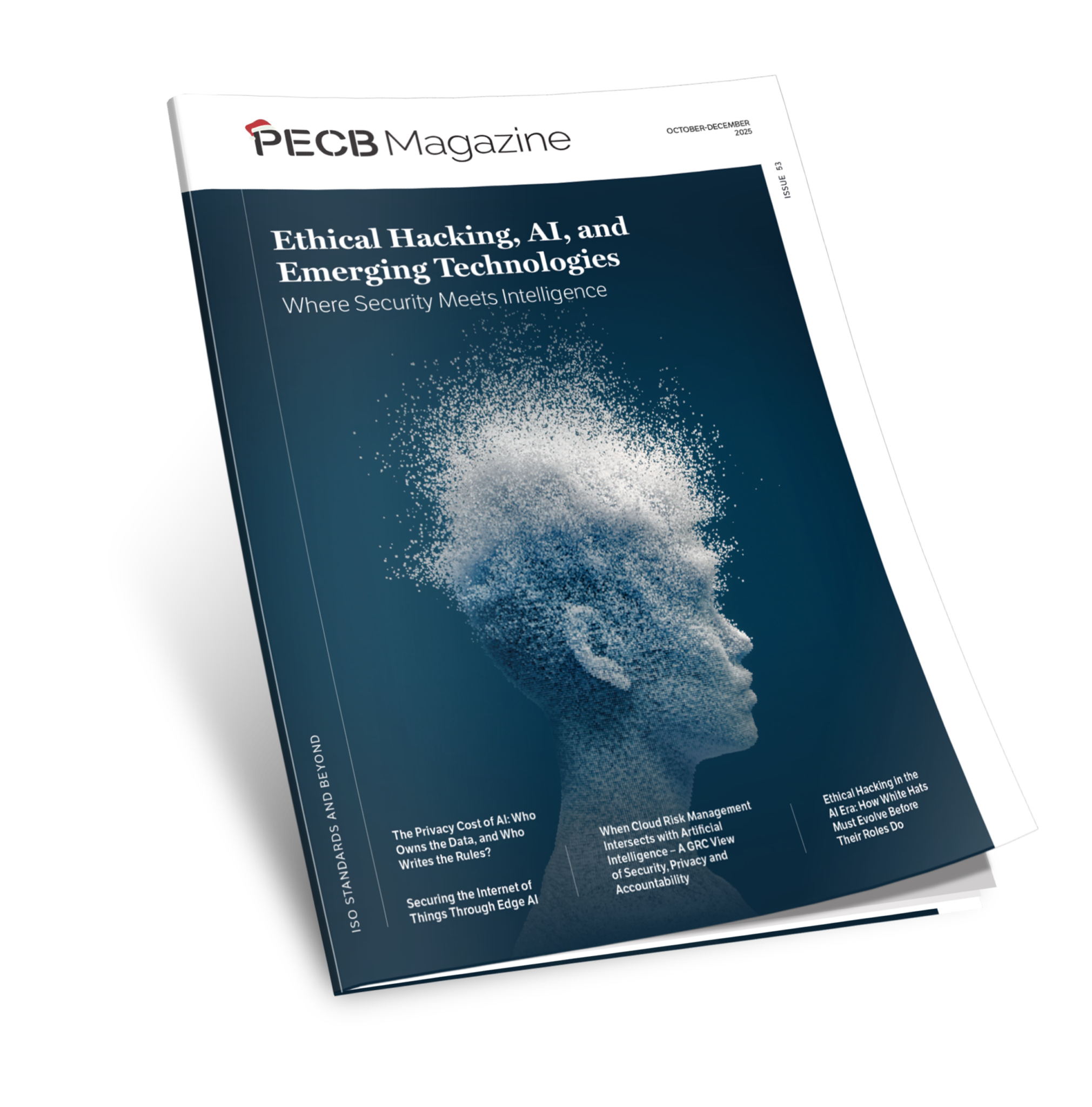
Explore Issue

Related Course

ISO/IEC 27001 Information Security Management System – Training Courses


Learn how to build your expertise in ISO/IEC 27001, the international standard for Information Security Management Systems (ISMS). Whether you’re starting your journey or advancing your career, our ISO/IEC 27001 training courses and certifications equip you with practical, in-demand skills to protect data, manage information risks, and enhance digital trust.

What is ISO/IEC 27001?

ISO/IEC 27001 provides requirements for organizations seeking to establish, implement, maintain and continually improve an information security management system. This framework serves as a guideline towards continually reviewing the safety of your information, which will exemplify reliability and add value to services of your organization.

Why is ISO/IEC 27001 important?

ISO/IEC 27001 assists you to understand the practical approaches that are involved in the implementation of an Information Security Management System that preserves the confidentiality, integrity, and availability of information by applying a risk management process. Therefore, implementation of an information security management system that complies with all requirements of ISO/IEC 27001 enables your organizations to assess and treat information security risks that they face.

Certified ISO/IEC 27001 individuals will prove that they possess the necessary expertise to support organizations implement information security policies and procedures tailored to the organization’s needs and promote continual improvement of the management system and organizations operations.

Moreover, you will be able to demonstrate that you have the necessary skills to support the process of integrating the information security management system into the organization’s processes and ensure that the intended outcomes are achieved.


ISO/IEC 27001 Requirements and Controls?

Key Requirements of ISO/IEC 27001

ISO/IEC 27001 outlines several mandatory requirements that ensure a systematic approach to managing sensistive information. The most important rrequirements include:

  1. Context of the Organization
    • Identify internal and external issues affecting information security.
    • Determine the needs and expectations of stakeholders.
  2. Leadership and Commitment
    • Top management must demonstrate active involvement in ISMS implementation.
    • Establish clear roles, responsibilities, and policies.
  3. Risk Assessment and Risk Treatment
    • Identify, analyze, and evaluate risks to information security.
    • Implement appropriate risk treatments to mitigate identified risks.
  4. Support
    • Provide adequate resources, training, and communication to ensure ISMS effectiveness.
  5. Operation
    • Plan, implement, and control ISMS processes.
    • Manage risks and security incidents effectively.
  6. Performance Evaluation
    • Conduct internal audits and management reviews to evaluate ISMS performance.
  7. Continual Improvement

ISO/IEC 27001 Annex A Controls

ISO/IEC 27001 was updated in 2022 to ensure that information security management systems based on it effectively address the ever-evolving security challenges. The revision mainly focused on Annex A, where its controls were restructured into four themes, and the number was reduced from 114 to 93 controls.

The four themes of the security controls of ISO/IEC 27001:2022 are:

  1. Organizational Controls
    • Information Security Policies: Develop and implement comprehensive security policies.
    • Incident Management: Have processes in place for reporting and responding to security incidents.
  2. People Controls
    • Awareness and Training: Ensure employees understand security risks and practices
    • Screening: Conduct background checks during recruitment.
  3. Physical Controls
    • Secure Areas: Protect physical access to information processing facilities.
    • Equipment Security: Prevent loss or damage to assets.
  4. Technological Controls
    • Access Control: Restrict system access based on roles and responsibilities.
    • Cryptography: Use encryption to protect sensitive data.

27001 controls

The main changes between ISO/IEC 27001:2013 and ISO/IEC 27001:2022

The transition from ISO/IEC 27001:2013 to ISO/IEC 27001:2022 introduces significant updates to align with evolving cybersecurity and privacy needs. The standard title has expanded from focusing solely on “information security management systems” to incorporating “information security, cybersecurity, and privacy protection” in the 2022 version. Technical revisions include replacing terms such as “international standard” with “document” and “may” with “can,” reflecting a more flexible and modern approach. 

Additionally, Annex A has been streamlined, reducing the controls from 114 across 14 categories in the 2013 version to 93 controls organized into four key themes: organizational, people, physical, and technological. These changes make the 2022 standard more concise and practical for today’s information security challenges.
 

iso 27001:2013 vs 27001:2022

Understanding ISO/IEC 27001:2022 Annex A Controls

Key steps in ISO 27001 certification process

Explore the ISO/IEC 27001:2022 Annex A controls and how to implement them, to strengthen your ISMS and safeguard against cyber threats.

Benefits of ISO/IEC 27001 Certification

Obtaining the PECB ISO/IEC 27001 Certificate will prove that you have:

  • Obtained the necessary expertise to support an organization to implement an Information Security Management System that complies with ISO/IEC 27001
  • Understood the Information Security Management System implementation process
  • Provide continual prevention and assessments of threats within your organization
  • Higher chances of being distinguished or hired in an Information Security career
  • Understood the risk management process, controls, and compliance obligations
  • Acquired the necessary expertise to manage a team to implement an ISMS
  • The ability to support organizations in the continual improvement process of their Information Security Management System
  • Gained the necessary skills to audit organization’s Information Security Management System

ISO/IEC 27001 Infographic

How do I get started with ISO/IEC 27001 Training?

Interested in expanding your knowledge and advancing your skills on Information Security? PECB experts are here to ease the certification process and help you obtain PECB Certified ISO/IEC 27001 Credentials.