Organizations operate in an increasingly volatile and interconnected environment, where multiple crises may arise over time. Disruptive events such as extreme weather, third-party failures, and cyberattacks have become common, reflecting both environmental uncertainties and growing digital dependencies.
This evolving landscape is supported by findings from the BCI Crisis Management Report 2024 [1](Figure 1), which shows that while 23.0% of organizations reported no crisis team activation in the past 12 months, a majority (57.9%) activated their crisis teams between one and five times, with others reporting even higher frequencies. These findings highlight that crises are not isolated events but recurring operational realities for many organizations.
[1] Business Continuity Institute (BCI). BCI Crisis Management Report 2024. London: BCI, 2024. https://25782305.fs1.hubspotusercontent-eu1.net/hubfs/25782305/Crisis-Management-Report-2024.pdf
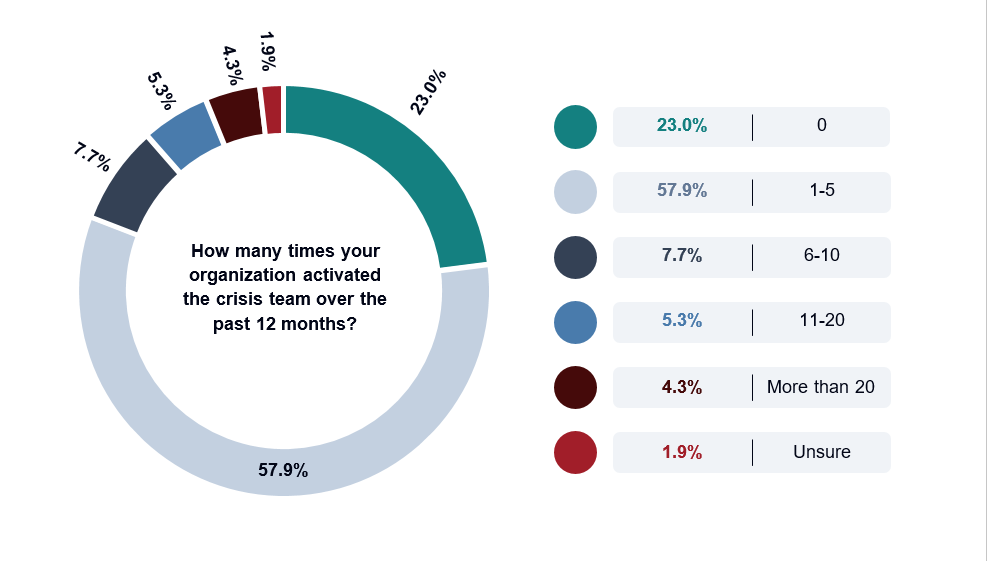
Figure 1. Frequency of Crisis Team Activation
In this context, crisis management becomes essential, as the way an organization responds to a crisis can directly affect its continuity, credibility, and long-term sustainability. Poorly managed crises may result in financial losses, operational disruptions, legal consequences, and lasting reputational damage. Furthermore, clear and timely communication throughout all phases of a crisis is critical for maintaining stakeholder trust and preventing the spread of misinformation, particularly in fast-paced digital environments.
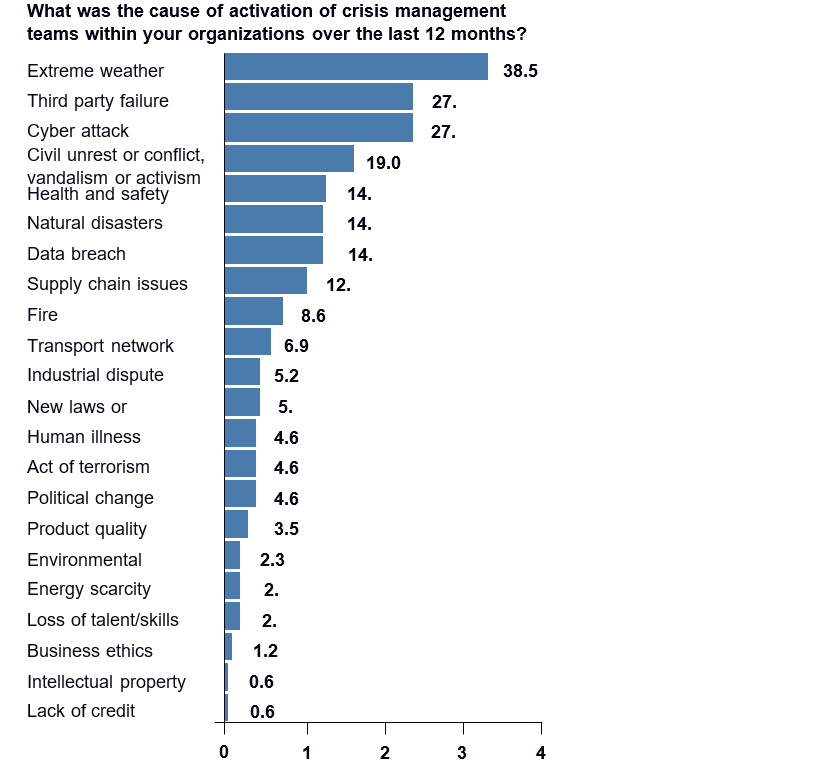
Additional insights from the BCI Crisis Management Report 2024 (Figure 2) further illustrate the diverse and evolving nature of organizational risks. Extreme weather events emerge as the leading cause of crisis activation (38.5%), followed by third-party failures and cyberattacks (both 27.6%), highlighting the growing impact of climate-related disruptions and digital interdependencies. Other notable causes include civil unrest or conflict (19.0%), health and safety incidents (14.9%), and data breaches (14.4%). This wide distribution of causes demonstrates that crises can originate from environmental, technological, operational, and socio-political factors, reinforcing the need for comprehensive and adaptable crisis management strategies.
identification, preparedness, response, and recovery, they can reduce the likelihood of crises and mitigate their impact. Strengthening training and awareness, along with reinforcing leadership and communication practices, also enables organizations to respond effectively, navigate uncertainty, and protect both operations and reputation.
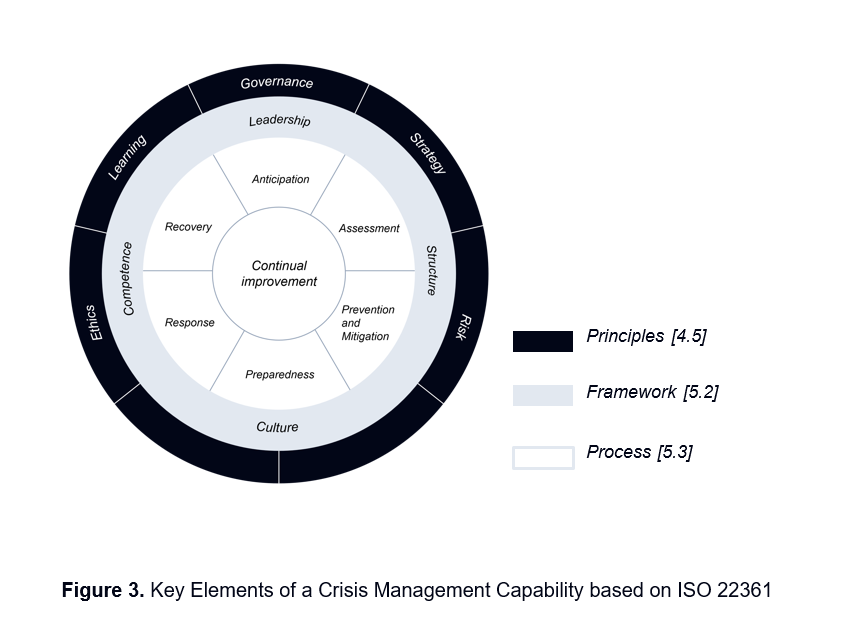
ISO 22361 provides guidance for organizations to develop, establish, maintain, monitor, and continually improve strategic crisis management capabilities. It promotes a structured approach built on leadership, structure, culture, and competence, supported by key principles such as governance, strategy, risk, decision-making, communication, ethics, and learning.
The standard also defines a comprehensive crisis management process covering anticipation, assessment, prevention and mitigation, preparedness, response, recovery, and continual improvement.
Applicable to organizations of all types, sizes, and industries, ISO 22361 supports leadership commitment, strengthens strategic decision-making, enhances communication during crises, improves organizational resilience, and fosters a strong safety culture.